On the run
The stretch between Oak and North on the Lakefront Trail is where you find out whether you're running toward something or just running. This morning it's Hit The Lights and I'm three minutes in when I realize this playlist isn't hair metal at all — it's the argument hair metal never finished having with itself.
The case is this: hair metal was not born in Los Angeles. It was assembled there from parts forged in cities that hated each other. Birmingham gave it mass — Black Sabbath's Paranoid crawls at 88 BPM like gravity has an opinion, Judas Priest's Electric Eye is chrome precision at 126. London gave it contempt: Led Zeppelin's Communication Breakdown from 1969 sits four tracks away from The Clash's White Riot recorded in 1977, a punk record on the same playlist as NWOBHM, which should be impossible. Los Angeles gave it the only thing missing: the performance of recklessness as a career strategy. Guns N' Roses doing Reckless Life live, Quiet Riot turning Slade's stomp into glam, both understanding that the show matters as much as the song.
The structural consequence is a BPM spread that spans 112 beats but holds a flat median around 150. Not chaos — a genre built from incompatible source materials that never resolved. That's why Metallica's thrash and Quiet Riot's glam sit at adjacent positions without either feeling like a concession, why Anthrax can drop Bring The Noise (a rap-metal hybrid that shouldn't exist but does) and Iron Maiden can follow it with The Trooper without the playlist collapsing.
Running this means running the argument. The sprint belongs to Metallica and The Clash and the Misfits — tracks that hit 180 BPM and dare you to keep up. The grind belongs to Birmingham: Sabbath and Priest, bands that understood weight before they understood speed. AC/DC's Let There Be Rock sits dead center at 145 BPM, the hinge between aggression and endurance, and by the time you hit Iron Maiden's Wasted Years at the end you realize the playlist never picked a side. It just kept moving.
I'm past Fullerton now and my legs are asking why I'm doing this and the only answer I have is: because the music never figured it out either.
From the coach
Run the argument the music never settled
Tracks 1–3 sit around 133 BPM. Do not chase them. Let your heart rate settle into aerobic range while the tempo builds underneath. This is your ramp.
Track 4 lifts you to 153 BPM. Match your turnover here. Tracks 7–9 spike to 163 — that is your threshold window. Push into the discomfort but hold your breath rhythm steady. Two beats in, two beats out. The BPM spread forces you to shift gears without warning, which mirrors the structural chaos of the playlist thesis. You are not smoothing this out. You are running through it.
Track 10 arrives at 36 minutes — right at the cognitive wall. The tempo drops to 144 BPM. Do not interpret this as permission to drift. This is a planned recovery before the final push. Tracks 13–15 return to 155 BPM. Use them. You have 15 minutes and a tailwind. Finish with your turnover locked to the kick drum, breath controlled, no fade.
Wall Breaker: Be All, End All
by Anthrax
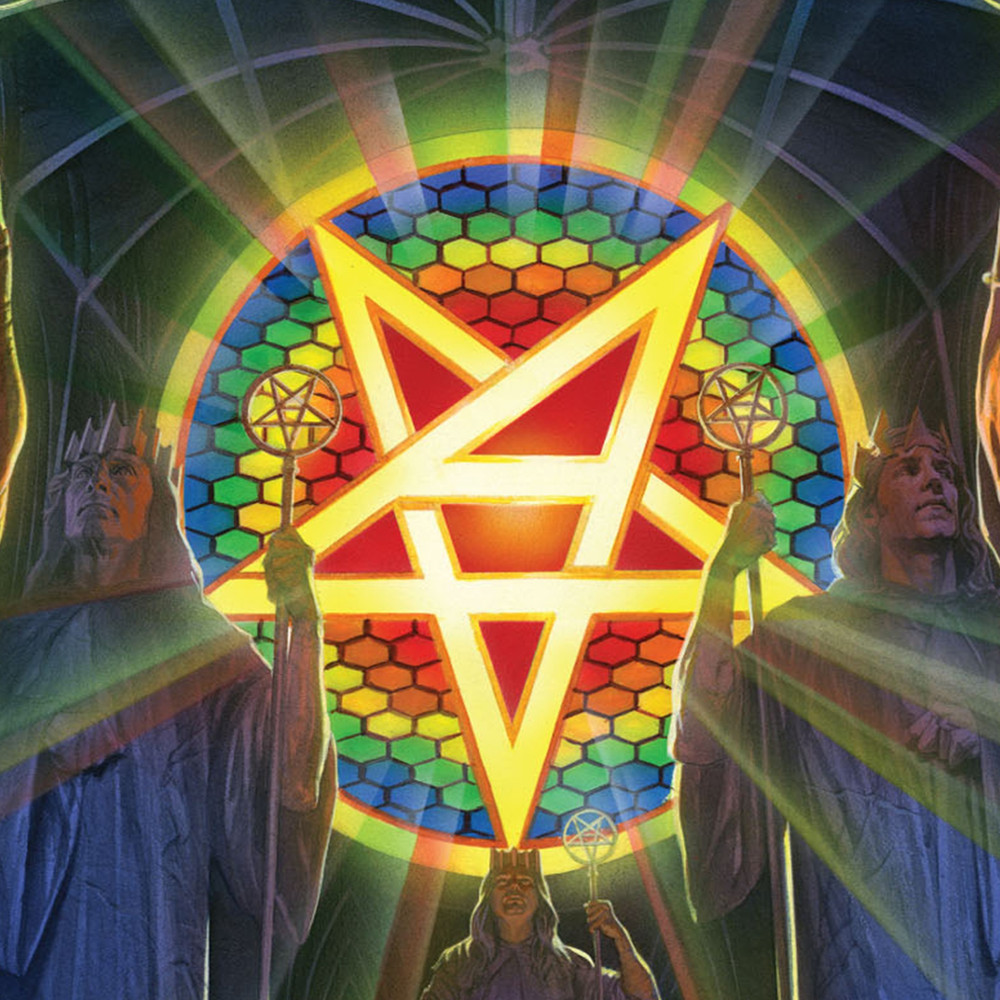
Be All, End All arrives at track twelve when you're deciding whether to finish strong or just finish. It's Anthrax at their most melodic — still thrash, still 160 BPM, but Scott Ian's riff locks into something almost anthemic while Joey Belladonna's vocal sits higher in the mix than anything else on Among the Living. Produced by Eddie Kramer (who recorded Zeppelin, Sabbath, and Kiss), it carries the weight of those bands without mimicking them. By this point in the run you've survived Metallica's opener, Sabbath's crawl, and The Clash's sprint. This track doesn't ask you to choose between speed and grind anymore — it just asks you to keep going. That's why it works here. It's not the hardest moment. It's the moment where the playlist stops arguing with itself and starts pulling you through.
FAQ
- How do I pace this playlist during a run?
- Start with Thrash Meets Chrome Meets Glam — it's aggressive but not unsustainable. When you hit The Birmingham-London Axis around mile two, settle into the grind; those tracks slow down but don't let up. Let London 1977, New Jersey 1982 spike your pace when The Clash hits, then use Anthrax and Anvil to pull you through the final third. Don't try to sprint the whole thing — the playlist won't let you.
- What type of run is this playlist built for?
- This works best for a hard 55-minute tempo run or a mid-distance push where you're not racing but you're not coasting either. The BPM spread is too wide for interval work and too aggressive for easy mileage. It's built for the kind of run where you're trying to figure something out and the only way through is forward. If you're training for a 10K or prepping for a half, this is your weekday grinder.
- How does the BPM range affect my cadence?
- The playlist averages around 150 BPM but swings from 88 (Sabbath's Paranoid) to 200 (The Clash's White Riot). That's not a bug — it's the whole point. The slower tracks force you to grind, the faster ones let you open up. Your cadence won't stay locked; it'll shift with the argument the music is having. Some runners hate that. I think it's the only honest way to run 55 minutes of genre war.
- What makes Be All, End All the key moment in this playlist?
- It hits at track twelve, right when you're deciding whether to finish strong or just survive. It's still thrash but Eddie Kramer's production gives it an anthemic lift that nothing else on the playlist has. By this point you've been through Metallica's opener, Sabbath's crawl, and The Clash's sprint. Be All, End All doesn't pick a side — it just keeps pulling you forward. That's why it works as the wall breaker.
- Why does this playlist mix punk with hair metal?
- Because hair metal was never one thing. It was Birmingham's doom, London's punk contempt, and LA's glam spectacle all trying to coexist on the same MTV rotation. The Clash and the Misfits are here because punk gave metal permission to stop pretending it was sophisticated. White Riot at 200 BPM and Paranoid at 88 BPM shouldn't share a playlist, but they share a worldview: loudness as honesty. That tension is what makes this work for running.
- Is this better for a 5K or a longer run?
- It's 55 minutes, so it's built for distance, not speed. A 5K runner will only get through the first six or seven tracks, which means you'd miss the Birmingham grind and the Anthrax-Anvil pull. This is a half-marathon training playlist or a solo 10K where you've got time to let the argument unfold. If you're racing short, make a cut. If you're grinding long, let it play out.