The wind off the lake hits you at North Avenue and your headphones shift. You push them back in just as "Less Than" starts, and here's what I've been trying to figure out for the last three weeks: why does Trent Reznor's catalog—this specific stretch of it, anyway—work at nine-minute miles when it was clearly recorded by someone who's never run anywhere except away from something?
I had a customer in the store last month, kid maybe twenty-two, asking if we had anything "industrial but chill." I pointed him toward The Fragile, then immediately regretted using the word chill about anything Trent Reznor has ever touched. But that's the thing about this playlist—it's not the Pretty Hate Machine scream-therapy version of Nine Inch Nails. It's the version that learned patience. The Downward Spiral taught Reznor how to dismantle himself in real-time. Everything after that is about what you build from the wreckage.
Eighty minutes is a long time to spend inside one person's head, but Reznor's catalog has always worked like that—obsessive, recursive, the same themes circling back with different production techniques. "Less Than," "The Background World," "Shit Mirror"—these are all from Add Violence and Bad Witch, the EPs where Reznor stopped trying to out-aggro himself and started experimenting with space. That's what makes them work at 107 BPM. Industrial music is usually about density—every frequency occupied, no room to breathe. But Reznor figured out that emptiness hits harder when you've been conditioned to expect noise.
Then Johnny Cash shows up.
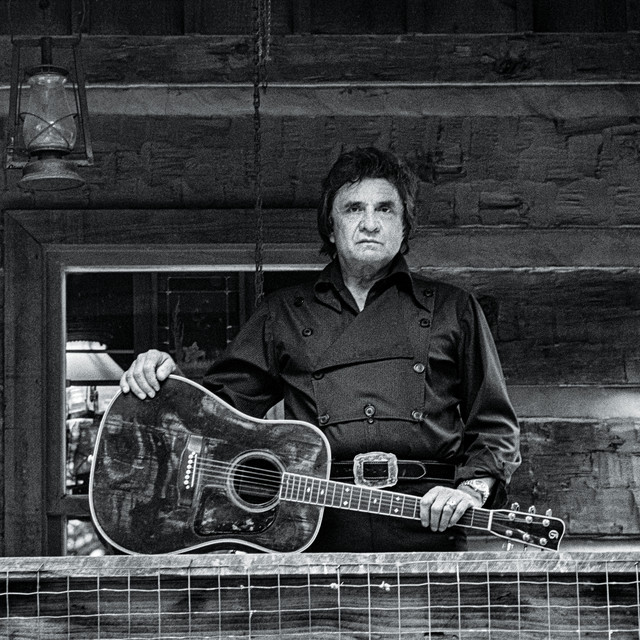
I've made my peace with the American Recordings series. When Rick Rubin stripped Cash down to an acoustic guitar and that canyon-deep voice, purists lost their minds. Too stark, too morbid, too much like a farewell. But "Hurt"—originally a Nine Inch Nails track from The Downward Spiral—becomes something else when Cash sings it. Reznor wrote it at twenty-nine, drowning in self-destruction. Cash recorded it at seventy, looking back at a life that had already survived its own ending multiple times. Hearing it in the middle of a Nine Inch Nails deep dive isn't a disruption. It's a reminder that these songs were always about endurance.
The tempo never spikes. That's the part that took me three runs to understand. I kept waiting for "Starfuckers, Inc." or "Burn" to crack 140 BPM and turn this into a sprint playlist. But they don't. Reznor builds tension through layers, not speed—drums programmed with industrial precision, basslines that sound like machinery cooling down, synths that hover just below the mix until you realize they've been there the whole time. At nine-minute miles, you're not racing. You're settling into a pace that requires control. The music matches that. Every track here knows how to sustain.
"Just Like You Imagined" is an instrumental from The Fragile, all piano and distortion, and it's the moment where I realize this playlist isn't about aggression. It's about the gap between the chaos you feel and the discipline it takes to keep moving through it. Reznor's whole career has been about that gap. He built his early reputation on rage, then spent two decades learning how to hold it at arm's length. The Ghosts albums, the film scores, the ambient work—this is music made by someone who figured out that control is harder than combustion.
The playlist stretches across eras. "Terrible Lie" is from Pretty Hate Machine, 1989, back when Reznor was working with Flood and Keith LeBlanc and the whole project was a reaction against the hair metal chokehold on rock radio. "The Perfect Drug" is from the Lost Highway soundtrack, 1997, peak Trent-as-goth-icon era. "Not Anymore" is from Hesitation Marks, 2013, where he partnered with Adrian Belew and the production got surgical. None of it feels random. Every track here is about what happens when you refuse to let the noise win.
Top 5 unpopular opinions I will die on: "The Background World" is the best Nine Inch Nails track of the last decade—it sounds like a panic attack rendered in slow motion, and that's exactly what mile three feels like. "13 Ghosts II" proves Reznor's ambient work is stronger than his rock catalog—fight me on this. Johnny Cash's "Hurt" is not a cover, it's a correction—he didn't make it sadder, he made it true. "The Warning" with Doudou N'Diaye Rose is the weirdest inclusion here and also the most necessary—Senegalese drumming under industrial production is what invention sounds like. "The Perfect Drug" was written for a soundtrack nobody remembers and it's still better than half of The Fragile—Reznor works best under constraints, not freedom. Honorable mention: running to instrumentals teaches you more about your pace than running to lyrics ever will.
I'm at mile six when "The Becoming" locks in, and my legs aren't complaining yet but they're asking questions. This is the part of the run where the playlist earns its construction. You're past the point where enthusiasm carries you. You're into the stretch where you either trust the rhythm or you start negotiating with yourself about walking. Reznor's production—especially the Flood and Alan Moulder sessions from The Downward Spiral era—is all about pressure. Layers compressed until they're almost uncomfortable, until the space between sounds feels as deliberate as the sounds themselves. At nine-minute miles, that pressure becomes the thing you lean into.
What came first, the music or the discipline? I don't know. But I know that running eighty minutes to one artist's catalog teaches you something about obsession. Reznor built a career on circling the same themes—control, collapse, the distance between who you are and who you're capable of becoming. This playlist doesn't resolve that. It just keeps running.